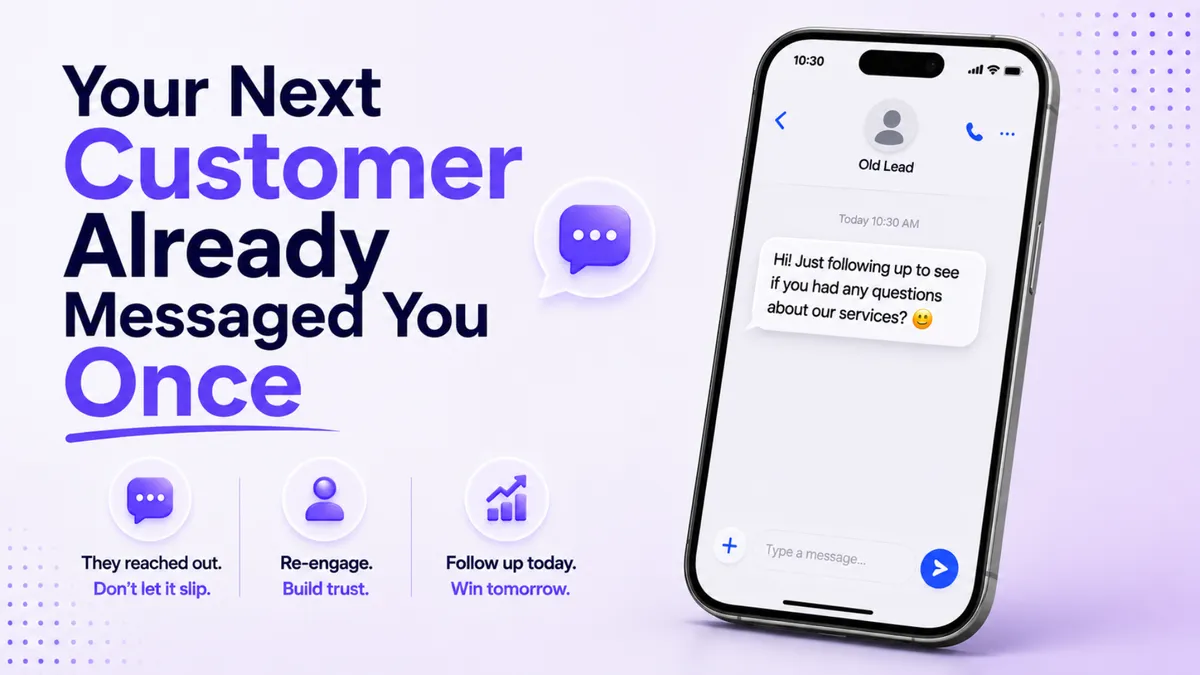
How to Follow Up With Old Leads (Before You Spend Another Dollar on Ads)
Most business owners who tell us they need more leads don't actually need more leads. They have 40 sitting in their phone from the last three months that nobody ever went back to.
It's a familiar story. Somebody inquired, you meant to reply properly, you got busy. Now it's been two weeks, it feels weird to message them, so you don't. And then you spend money on ads to find new people while the ones who already raised their hand go cold.
Quick Answer: How do you follow up with old leads?
To follow up with old leads, go back 90 days through your inquiries, find everyone who asked about your services but never booked, and send each one a single short message asking if they still need help. Keep it human, not salesy. A CRM like PulseGrowth, an all-in-one CRM and automation platform for service businesses, can find those contacts and send the messages automatically, so the follow up actually happens instead of staying on your to-do list.
Why are your old leads worth more than new ones?
Because they already chose you once. Someone who inquired about your service did the hard part: they found you, decided you looked credible, and reached out. Their interest didn't necessarily die. It just went quiet while you were busy.
New leads, by contrast, cost money before they've shown any of that intent. Buying more of them while ignoring the warm ones is like advertising for new customers through the front door while the back door swings open.
What should the follow up message say?
One message. Not a pitch, not a promotion, just a normal human check-in:
"Hi [name], you asked about [service] a little while back and I wanted to check whether you still need help with it. No pressure either way."
That's it. You'll be surprised what comes back. Some people finished the job elsewhere, fine. But a meaningful slice were simply waiting for someone to make it easy, and you'll be the business that followed up when nobody else did.
Do this before you spend another dollar on advertising. It costs you nothing but an hour, and with an automated workflow it doesn't even cost that. This is exactly the kind of follow up sequence we build for businesses on PulseGrowth, and it's usually the fastest revenue win in the whole setup.
Why do evening callers keep slipping away?
Here's the after hours version of the same leak. Someone calls at 8pm, gets your voicemail, and hangs up without leaving a message. Almost nobody leaves messages anymore. They just call the next business on their list, and you never even know they existed.
The annoying part is that evening callers are usually the best ones. They're not browsing. They've finally sat down after work to sort one thing out, and that someone is ready to book.
This doesn't mean you should answer the phone at eight at night. You have a family, a dinner, a life. But something should answer, even if it's not you:
- A text back within a minute of the missed call, so the caller knows they reached a real business.
- A system that picks up, answers common questions, and books the appointment on the spot.
- A payment or booking link sent straight away, so a ready buyer can act while the motivation is still there.
The difference isn't working later. It's not being the only option that disappears at 5pm. An AI receptionist handles exactly this, and it never gets tired of the question it's answered a hundred times that week.
What should you never automate?
We're big believers in automation, obviously. But there are three conversations that should stay human, every time:
- Complaints. When someone is upset, they don't want an efficient response. They want to feel heard. A machine can be polite, but it can't be sorry.
- Bad news. A price increase, a slipped timeline, a mistake on your side. That comes from a person, every time.
- The conversation right before someone spends serious money with you. That's the moment they're deciding whether to trust you. Don't outsource it.
Here's the trade that makes it work: automating the repetitive front end, the missed calls, the FAQs, the follow ups, is what buys you the time to actually be present for those three. The point of a good system isn't to remove you. It's to buy back your attention.
How fast should you roll all this out?
Slower than the AI hype wants you to. A lot of owners feel pressure to implement AI everywhere at once, and the honest result is usually more chaos, not more clarity. There are so many tools that the choosing alone gets overwhelming.
The systems that run well weren't built overnight. They were built one piece at a time and then tweaked. So start with one thing. Fix the missed call text back this week. Run the 90 day reactivation next week. Add the AI receptionist after that. One step at a time beats ten tools at once, and the human part of your business stays intact while you build.
Key Takeaways
- Search the last 90 days for people who inquired but never booked, and message them before buying new leads.
- Keep the reactivation message human: one short check-in, no sales pitch.
- Put something in place that answers after hours, because evening callers are often your readiest buyers.
- Keep complaints, bad news, and big money conversations human, and automate the repetitive work around them.
- Roll out automation one step at a time instead of adopting every tool at once.
FAQs
Is it too late to follow up with a lead from months ago?
Usually not. If the problem they asked about was real, there's a fair chance it still is. A short, pressure-free check-in either restarts the conversation or closes the loop. Both beat silence.
Won't people find a follow up message annoying?
Not if it's one message and it reads like a human wrote it. What annoys people is a drip of automated sales pitches. A single "do you still need help with this?" is a courtesy, not a campaign.
How does missed call text back actually work?
When a call goes unanswered, your system automatically sends the caller a text within about a minute, something like "Sorry we missed you, how can we help?" The conversation moves to text, where it can be answered and booked even after hours.
Can AI really book appointments without me?
Yes. An AI receptionist can answer the call or message, handle common questions, and book directly into your calendar. You set the rules, and it hands anything sensitive to a human.
What should I automate first?
Start with the leak that's costing you most. For most service businesses that's missed calls, followed by the 90 day lead reactivation. Both pay for themselves quickly and neither risks a customer relationship.
Want more like this?
PulseGrowth includes the CRM, the missed call text back, the AI receptionist, and the follow up automations in one platform. Start your free 14 day trial, and we'll help you set it up, including that first 90 day reactivation campaign.
The PulseGrowth Team


